


Updated 3 times. Last updated on See all updates
com.android.server.telecom is the package name of Android’s Telecom service. In the Android Open Source Project code, its manifest declares package=”com.android.server.telecom” with coreApp=”true” and android:sharedUserId=”android.uid.system”. The Android Telecom framework is responsible for managing calls on an Android device, and this package is where that framework runs. It is safe; it is part of the operating system, and you should not try to remove it.
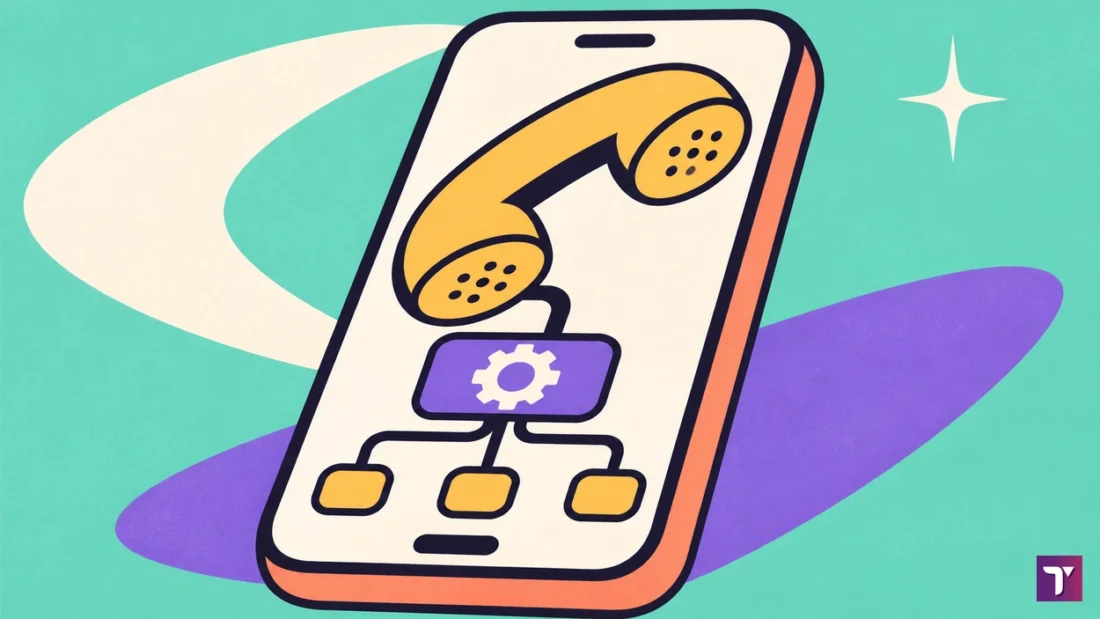
Most phones show it in the app list under a friendlier name. Its official label, as seen in “Manage Applications” and other settings UIs, is Phone Calls. Below: what the service does, how it changed since Android 5.0, what a “Used com.android.server.telecom” entry in Google activity means, and what you can and cannot switch off.
Key Takeaways
- The android.telecom framework was added in API level 21.
- The Telecom app runs with android:process=”system”, so it is part of the core OS rather than a download.
- In the android-5.0.0_r1 source, the same package used android:sharedUserId=”android.uid.phone”.
- Devices that run Android 10 (API level 29) or higher allow apps to identify calls from numbers that aren’t in the user’s address book as potential spam calls.
- You can’t delete some system apps that came pre-installed on your Android phone, and this is one of them.
What Is com.android.server.telecom?
It is the system app that hosts Android’s call manager. The manifest names the application label @string/telecommAppLabel and sets android:process=”system”, android:directBootAware=”true” and android:allowBackup=”false”. It also declares a TelecomService component with android:singleUser=”true” that handles the android.telecom.ITelecomService action.
The shared android.uid.system user is the important detail. It means the package runs as part of the operating system itself, which is why no app store lists it and no uninstall button appears.
Field | Value in the source |
|---|---|
Package | com.android.server.telecom |
coreApp | true |
Shared user | android.uid.system |
Process | system |
App label | Phone Calls |
Source: Android Open Source Project, 2026
Why is it called Phone Calls and not Call Management?
A comment in the source says the term “phone calls” is used since an end user would more commonly think of the stuff the Telecom framework deals with as having to do with “phone calls”, not “call management” (even though that is technically more accurate). So a Phone Calls entry under system apps is this package.
Plenty of Android system packages have names that look alarming in an app list. SKMS Agent Service and IMS Logger raise the same question and get the same calm answer.
What Does com.android.server.telecom do?
Per Android Developers, com.android.server.telecom hosts the switchboard between the apps that connect calls and the apps that show them. According to the Telecom framework overview, the Android Telecom framework manages audio and video calls on an Android-powered device, including SIM-based calls and VoIP calls. The framework works in three parts:
- The most common ConnectionService implementation on a phone is the telephony ConnectionService, which connects carrier calls.
- The most common implementation of an InCallService is the phone app that’s bundled with a device.
- Telecom routes calls that ConnectionService implementations provide to the calling user interfaces that InCallService implementations provide.
In plain terms, your carrier connection and a VoIP app both hand their calls to this service, and your dialer app draws the call screen on top of it. That is also why the service matters when you block a number on Android: the package declares a BlockedNumbersActivity that responds to android.telecom.action.MANAGE_BLOCKED_NUMBERS.
Worth noting: Users can choose to have spam calls silently rejected, and information about these blocked calls is logged in the call log. Using the Android 10 API eliminates the requirement to obtain the READ_CALL_LOG permission from the user in order to provide call screening and caller ID functionality.
Text on Your Phone That Comes From This Package
Several screens and notifications belong to com.android.server.telecom rather than to your dialer app. When an app requests that a call be put into the background so that the app can access the audio from the call, the package shows a persistent notification titled Background call.
Text you see | When it appears |
|---|---|
Background call | An app has put a call in the background to access its audio |
(App name) stopped responding | The in-call app crashed, and the system fell back to the system dialer |
Your call used the phone app that came with your device | Body of the same crash notification |
You won’t receive calls or texts from blocked numbers | Top of the Blocked numbers screen |
Make (app name) your default Phone app? | You switch to a different dialer |
Source: Android Open Source Project, 2026
The stopped responding label is used when the in-call service has crashed, and the system falls back to using the system dialer. If you have seen that message after a third-party dialer crashed, this package is what kept the call alive. Picking a new dialer triggers another warning: the new app “will be able to place and control all aspects of calls. Only apps you trust should be set as the default Phone app.” The same caution applies to the best dialer apps you might install.
How com.android.server.telecom Changed Since Android 5.0
The package name has not changed, but its identity inside the OS has. The android-5.0.0_r1 manifest declares package=”com.android.server.telecom” with coreApp=”true” and android:sharedUserId=”android.uid.phone”. In that release, the official label of the Telecomm/Phone app was Phone. The current main branch manifest keeps package=”com.android.server.telecom” but declares android:sharedUserId=”android.uid.system”, and the label is now Phone Calls.
Field | android-5.0.0_r1 | Main branch |
|---|---|---|
Package | com.android.server.telecom | com.android.server.telecom |
coreApp | true | true |
Shared user | android.uid.phone | android.uid.system |
App label | Phone | Phone Calls |
Source: Android Open Source Project, android-5.0.0_r1 tag and main branch, 2026
The permission list grew too. The main branch manifest requests READ_CONTACTS, SEND_SMS, READ_CALL_LOG, and BLUETOOTH_PRIVILEGED, among others, and a source comment says READ_CONTACTS is required to check for direct-to-voicemail and to load custom ringtones for incoming calls, which are specified on a per-contact basis.
Key finding: The android-5.0.0_r1 manifest requested WRITE_CALL_LOG, BIND_CONNECTION_SERVICE and BIND_INCALL_SERVICE, permissions that cover the call log and the apps that connect and display calls. In the same release, the official label of the Telecomm/Phone app, as seen in “Manage Applications” and other settings UIs, was Phone.
The public Telecom APIs arrived in steps. According to Android Developers, android.telecom was added in API level 21, ConnectionService in API level 23, and CallRedirectionService in API level 29. For VoIP apps built on Core-Telecom, the library uses foreground types (Android 14 API level 34 and higher) for foreground support.
View the data
Category | Value |
|---|---|
android.telecom package | 21 |
ConnectionService | 23 |
CallRedirectionService | 29 |
Core-Telecom foreground types | 34 |
Each step gave third-party calling apps more hooks into the same service, which is why the package now touches VoIP apps, call screening, and dialer swaps, not only SIM calls.
What does Used com.android.server.telecom mean?
Google saves that entry as app activity in your Google Account, not as an alert. When you use Google sites, apps, and services, some of your activity is saved in your Google Account, and you can find and delete your activity in the “My Activity” section of your account.
A “Used com.android.server.telecom” entry most likely lines up with a call placed or received on that phone. To check the entry yourself, follow these 4 steps:
- Go to your Google Account.
- On the left navigation panel, select Data & privacy.
- Under “Personalization & activity,” select My Activity.
- At the bottom of the item, select Details.
You’ll find the date and time of the activity and why it was saved, and you might also get location, device, and app information. If the device named there is not yours, sign out of that device and change your Google password.
Is com.android.server.telecom Safe?
Yes, com.android.server.telecom is safe: the package is part of Android’s own source code, published in the Android Open Source Project, and its manifest runs the application in the system process.
Its permissions look broad because its job is broad. The manifest requests READ_CALL_LOG, READ_CONTACTS, and MODIFY_PHONE_STATE, which fits a service that routes every call on the phone. If you still want to check the phone for spyware, use Google Play Protect:
- Google Play Protect checks your apps and devices for harmful behavior.
- It checks your device for potentially harmful apps from other sources.
- It checks apps when you install them and also periodically scans your device.
If Play Protect finds a potentially harmful app, it might send you a notification, disable the app until you uninstall it, or remove the app automatically.
Verdict: Keep it. Android’s call handling depends on this package, and a phone without it has no working way to place or receive calls.
Removing or Disabling com.android.server.telecom
According to Android Help, you can’t delete some system apps that came pre-installed on your Android phone, but on some phones you can turn them off so that they won’t show on the list of apps on your phone. On Galaxy phones, Samsung notes that some preloaded apps cannot be uninstalled and that not all pre-installed apps can be disabled.
Even where a Disable option appears, leave Phone Calls on. Turning off the call switchboard is how a phone stops ringing. If calls misbehave instead, clear the cache first in 3 steps:
- Navigate to and open Settings, then swipe to and tap Apps.
- Select or search for the app you want to clear.
- Tap Storage, and then tap Clear cache.
Some system apps cannot have their data cleared. Call problems during an alarm are a separate issue, covered in Will my alarm go off during a call. Developers can inspect the package with the Android Debug Bridge without removing it.
Command | What it does |
|---|---|
adb shell pm list packages -s | Shows system packages only |
adb shell pm list packages -d | Shows disabled packages only |
adb shell pm list packages telecom | Shows packages whose name contains telecom |
adb shell pm enable com.android.server.telecom | Enables the package again |
Source: Android Developers, 2026
With pm list packages, -s filters to only show system packages, and -d filters to only show disabled packages. The enable command enables the given package or component.
Calling risk: Disabling or uninstalling com.android.server.telecom with ADB can leave the phone unable to place or receive calls, including emergency calls. Do not run disable or uninstall commands against this package.
How do you tell if someone has hidden apps on Android?
Start with the hidden list in Samsung’s launcher. On a Galaxy phone, touch and hold an empty spot on a Home screen, tap Settings, then tap Hide apps on Home and Apps screens; hidden apps appear at the top of the screen, under Hidden apps. Hiding an app won’t remove the app from your device, but it will remove the icon.
To see what is running, tap the Recents icon on the Navigation bar to see your most recently used apps and any apps that are currently running in the background. A computer with ADB gives the fuller list, since pm list packages prints all packages, and -3 filters to only show third-party packages. Samsung’s diagnostic menus are a separate topic, covered in engineer mode on Android.
Conclusion
com.android.server.telecom is declared in the Android Open Source Project manifest with coreApp=”true” and android:sharedUserId=”android.uid.system”, and the android.telecom framework it hosts was added in API level 21. It is Android’s call switchboard, shown as Phone Calls, and nothing about it points to spyware.
Leave it installed and enabled. When a Used com.android.server.telecom line turns up in Google activity, open its Details and check the device name before assuming anything, and clear the app cache before touching ADB when calls misbehave.
Update log
- Replaced the unsourced overview with the Android Open Source Project manifest, which runs the package in the system process, and a Telecom API timeline across 4 API levels.
- Added how the package changed since the android-5.0.0_r1 source, from the label Phone to Phone Calls, with Telecom APIs from API level 21 to 34.
- Added the 4 steps to open a Google My Activity entry, the on-screen text the package owns, a Play Protect spyware check, and how to find hidden apps.
Cite this page
Namase, R. (2026, November 27). com.android.server.telecom: What It Is and If It’s Safe. TechKV. https://techkv.com/android-server-telecom/
Namase, Rajesh. “com.android.server.telecom: What It Is and If It’s Safe.” TechKV, 27 Nov. 2026, https://techkv.com/android-server-telecom/.
Namase, Rajesh. “com.android.server.telecom: What It Is and If It’s Safe.” TechKV, Last modified November 27, 2026. https://techkv.com/android-server-telecom/.
Source: <a href="https://techkv.com/android-server-telecom/">com.android.server.telecom: What It Is and If It’s Safe</a>, TechKV
References13 sources from 4 publishers
- AOSP Telecomm: AndroidManifest.xml (main branch)
- AOSP Telecomm: AndroidManifest.xml (android-5.0.0_r1)
- AOSP Telecomm: res/values/strings.xml (main branch)
- Android Developers: android.telecom package summary
- Android Developers: Telecom framework overview
- Google Account Help: Access and Control Activity in Your Account
- Google Play Help: Use Google Play Protect to Help Keep Your Apps Safe
- Android Help: Delete or Disable Apps on Android


3 reader comments open for replies
ok. what if I disable it??
It is not suggested to disable or delete com.android.server.telecom because it is necessary for managing phone services on Android devices. Changing system apps can make the device not work at all or cause major functionality problems. Be careful as you go.
This constantly runs on my sim-less tablet and uses 564MB of RAM.