


Updated 3 times. Last updated on See all updates
SKMS Agent Service is the Samsung KMS Agent, a client application for Android devices to support eSE-based mobile-NFC services, and Samsung’s description of it says no customer card data, personal financial information, or physical location information is exchanged. It is not spyware. You do not need to remove it, and Samsung does not offer a disable option for every system app.
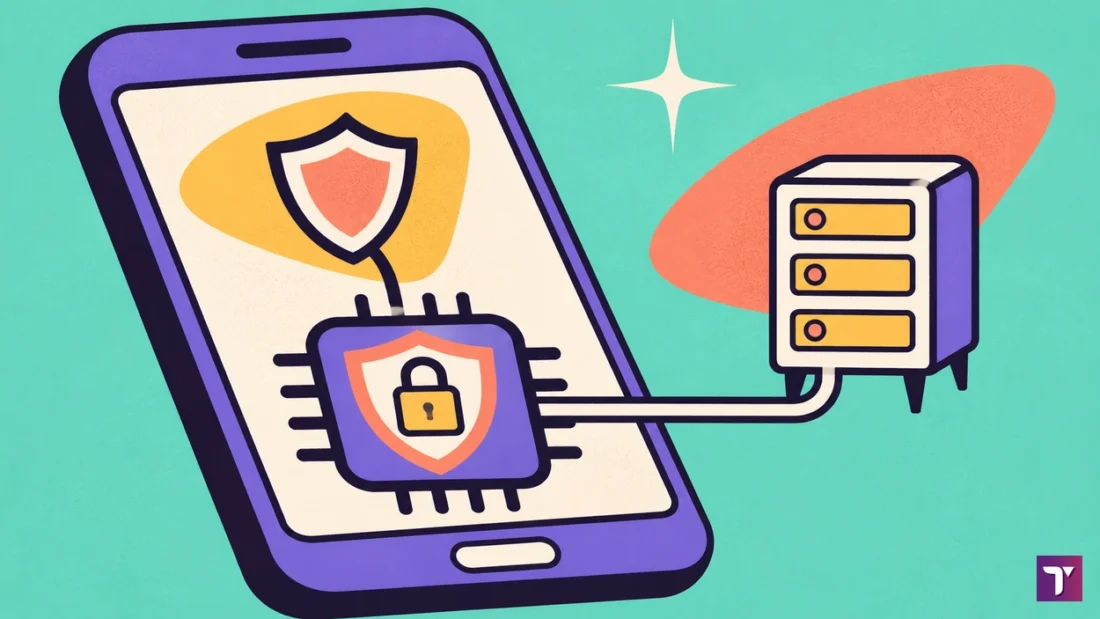
The package name is com.skms.android.agent. It talks to the embedded Secure Element (eSE), a chip that, according to Samsung’s eSE SDK documentation, on Samsung devices has at least an EAL5+ (Evaluation Assurance Level) rating. Below you will find what the agent does, why it contacts a server, how it differs from ordinary tap-to-pay, how long Samsung has maintained it, and what happens if you try to disable it.
Key Takeaways
- From version 1.0.41-31, SKMS Agent manages the protocol with SKMS and forwards SKMS commands to eSE, the phone’s secure chip.
- The description for Samsung KMS Agent 1.0.41-34 says no customer card data, personal financial information, or physical location information is exchanged.
- Embedded Secure Element (eSE) chips on Samsung devices have been certified by authorities such as GlobalPlatform, EMVCo, and Common Criteria, and all of them have at least an EAL5+ rating, per Samsung Developer documentation.
- Android 4.4 and higher provide an additional method of card emulation that doesn’t involve a secure element, called host-based card emulation, according to Android’s developer documentation.
- The latest variant builds run from 1.0.28.2 for Android 5.0+ on December 12, 2017, to 1.0.41-41 for Android 17+ on April 22, 2026, per the APKMirror variant index.
- Recent builds list file sizes of 946.12 KB for version 1.0.41-39 and 1.09 MB for version 1.0.41-41.
- According to Samsung’s support guide, updated May 26, 2026, the disable option is available only for some apps.
What is SKMS Agent Service?
SKMS Agent Service is a Samsung system app that links secure phone features to a Samsung server. Samsung KMS (SKMS) Agent is a client application for Android devices to support eSE-based mobile-NFC services, according to Samsung’s description of version 1.0.41-34. App stores list it as Samsung KMS Agent, while most people search for it as SKMS Agent Service.
The two halves work as a pair. SKMS is considered an HTTPS Server, while SKMS Agent works as an HTTPS Client. The app on your phone is the messenger, and the server sends the instructions.
The chip on the other end is what makes the arrangement worth having. A Secure Element is a tamper-resistant platform (typically a single-chip secure microcontroller) capable of securely hosting applications and their confidential and cryptographic data. Secure Elements offer separate hardware-backed security so that sensitive information or transactions can be performed independently from other processors.
What Is SKMS?
SKMS is the server side of the pair. SKMS Agent manages the protocol with SKMS and forwards SKMS commands to the eSE, so the phone app acts on the server’s commands. Samsung’s description writes the name as “Samsung KMS” and does not spell out the acronym, so treat any expansion you read elsewhere as an informed guess. That server connection is exactly what worries people, so it deserves a straight answer.
Is SKMS Agent Service spyware?
No, Samsung’s description of the Samsung KMS Agent app states that no customer card data, personal financial information, or physical location information is exchanged. Those three categories cover what a spyware worry is really about: your cards, your money, and where you are. The app’s network traffic carries secure-chip instructions.
An unfamiliar package name is not evidence of anything. This one is signed, named, and documented by Samsung, and it has shipped in updated builds for years, which is the opposite of how malware behaves.
Key finding: A client application requests creating Card Content Management to Regional Trusted Service Manager first, and then requests a job execution to SKMS Server using SKMS Agent interface, per Samsung’s app description. The agent is plumbing for that request chain. It carries instructions for the secure chip rather than collecting data about the person holding the phone.
If you found SKMS Agent while scrolling through system apps, you may also have spotted KLMS Agent near it. That package handles additional security on the Knox side, and the same calm reading applies to it.
What does SKMS Agent do on a Samsung phone?
SKMS Agent forwards SKMS commands to the eSE. Samsung’s eSE SDK documentation lists Transits, Payments, Digital Key access (Door key, car key, etc.), Identification / Authentication, and Secure storage / Certificate Manager as use cases for eSE on Samsung devices. The agent is the delivery route for those chip-based services.
Samsung Pay is the example most explainers attach to SKMS Agent, but Samsung’s own documentation points somewhere narrower. All Samsung Pay tokens and keys are stored in encrypted form using a hardware-based device key within the TrustZone®, the Trusted Execution Environment. The eSE is listed separately for Transit, Digital Keys, and IDs (mobile driver’s license, student ID).
That suggests the agent matters most for wallet items that live on the chip, such as a transit card or a digital car key, rather than for every card payment. Samsung does not publish a list of which features call SKMS Agent, so read that as the likely split, not a guarantee.
Work phones use the same hardware for credentials. Knox provides a group of policies to manage universal authentication credentials in both external and internal device storage, for example, a smartcard, micro SD card, or embedded Secure Element.
Secure Element vs Host Card Emulation
According to Android’s host-based card emulation documentation, in most cases, the card is emulated by a separate chip in the device, called a secure element, and Android 4.4 and higher provide an additional method of card emulation that doesn’t involve a secure element, called host-based card emulation.
The first method is the one SKMS Agent serves. When NFC card emulation is provided using a secure element, the card to be emulated is provisioned into the secure element on the device through an Android application. An app that uses host-based card emulation answers the reader from software instead, so it does not rely on the secure chip at all.
The chip is not always inside the phone’s own hardware either. Many SIM cards provided by wireless carriers also contain a secure element.
Worth noting: When the user holds the device over an NFC terminal, the NFC controller in the device routes all data from the reader directly to the secure element, per Android’s documentation. That hardware path is the part SKMS Agent supports. Apps that emulate cards in software sit outside it, which is why removing the agent would not stop every tap payment.
SKMS Agent Release History by Android Version
Android 5.0+ variant’s latest build is 1.0.28.2, dated December 12, 2017, and Android 17+ variant’s latest build is 1.0.41-41, dated April 22, 2026, per the Samsung KMS Agent variant index on APKMirror, so Samsung has kept the agent current for nearly a decade.
View the data
Category | Value |
|---|---|
2017 | Build 1.0.28.2 for Android 5.0+ |
2019 | Build 1.0.40-28 for Android 8.0+ |
2020 | Build 1.0.40-46 for Android 10+ |
2021 | Build 1.0.40-66 for Android 11+ |
2022 | Build 1.0.40-81 for Android 12+ |
2024 | Build 1.0.41-18 for Android 14+ |
2025 | Build 1.0.41-30 for Android 15+ |
2026 | Build 1.0.41-41 for Android 17+ |
Two variants fall between those rows. Samsung keeps a separate build line for each minimum Android version, so a variant for a newer Android release can carry a lower version number or an older date. Android 13+ variant’s latest build is 1.0.42-02 from May 25, 2025, and the Android 16+ variant’s latest build is 1.0.41-39 from May 14, 2026. A separate Samsung KMS Agent (Wear OS) build, version 1.0.41-20, was uploaded on November 19, 2025, so the same name can appear on a watch.
An abandoned or rogue package would not keep appearing for each new Android release. This one does, which is a good sign that it is a maintained part of Samsung’s software.
Does SKMS Agent drain battery or storage?
Samsung KMS Agent 1.0.41-39 has a file size of 946.12 KB, and version 1.0.41-41 has a file size of 1.09 MB, per the release listing on APKMirror. Storage use is negligible, and removing the agent, even if you could, would free roughly one megabyte.
View the data
| Category | Value |
|---|---|
| 1.0.41-29 | 946.12 |
| 1.0.41-30 | 946.12 |
| 1.0.42-02 | 898.06 |
| 1.0.41-31 | 942.12 |
| 1.0.41-34 | 942.12 |
| 1.0.41-36 | 946.12 |
| 1.0.41-39 | 946.12 |
Samsung publishes no battery figure for the agent. It acts when a secure-chip service sends it a request, so it should not sit near the top of your battery usage list. If it does, try the cache fix below first. The usual battery and speed culprits are user-installed apps, and our list of apps that slow down Android phones is a better place to start looking.
Can you disable or uninstall SKMS Agent Service?
Usually not, according to Google’s Android Help, which states that you can’t delete some system apps that came pre-installed on your Android phone. Samsung’s support guide, updated May 26, 2026, says the hide apps option is available for all pre-installed apps, but the disable option is available only for some apps.
To check your own phone, follow Samsung’s path: Navigate to and open Settings, then swipe to and tap Apps, then find Samsung KMS Agent in the list. If there is no Disable button on its page, that option is not offered for it, because not all pre-installed apps can be disabled.
Is it safe to disable SKMS Agent Service?
It is not a good idea. Samsung lists the eSE as the home for Transit, Digital Keys, and IDs (mobile driver’s license, student ID) in Samsung Wallet, and SKMS Agent carries the commands for that chip. Disabling it could break adding or updating those items. Samsung does not document the side effects, so leave it enabled.
If you already turned it off, switch it back on. Samsung’s guide covers how to delete, hide, show, disable, and enable pre-installed apps, so a disabled system app returns from the same Apps screen.
How to Fix Samsung KMS Agent Keeps Stopping Errors
Clear the app’s cache first, then its data. Samsung’s support page says if an app seems unresponsive, you can try clearing its cache and data, and it warns that some system apps cannot have their data cleared. Restart the phone after each step so you can tell which one worked.
- Navigate to and open Settings, and then swipe to and tap Apps.
- Select or search for the app you want to clear, in this case Samsung KMS Agent.
- Tap Storage, and then tap Clear cache.
- If the error comes back, tap Clear data, then tap Delete.
- Restart the phone and reopen the wallet feature that triggered the message.
Clearing data is the stronger step, and it has a cost. Clearing an app’s data will reset the app to its default settings. If the message still returns, install the latest software update from Settings, since Samsung ships new builds of the agent alongside Android releases.
Other Samsung System Apps You Might See Next to SKMS Agent
Samsung’s apps list holds several other package names that look alarming at first glance. Each has its own explainer on this site, and each deserves the same calm check before you touch it:
- The IMS Logger diagnostics package is another name that sends worried owners to search.
- The com.samsung.sdm.sdmviewer package shows up in the same system apps list.
- The Mobile Installer on Samsung phones raises the same “should I remove this” question.
Check the vendor first, then whether the app can be disabled. Leave system components alone unless there is a clear problem.
Do I need Samsung KMS Agent on my phone?
Yes, if you use any chip-based feature in Samsung Wallet, and it costs you nothing to keep it if you do not. Samsung devices with eSE allow customers to use secure services, and SKMS Agent is how those services reach the chip.
If you never use transit cards, digital keys, or stored IDs, the agent sits idle. It takes up about a megabyte and does nothing until a service asks it to, so there is no benefit to fighting it.
Conclusion
SKMS Agent Service is Samsung’s messenger between its SKMS server and the eSE chip, and Samsung’s own description says no customer card data, personal financial information, or physical location information is exchanged. The chip it serves on Samsung devices has at least an EAL5+ (Evaluation Assurance Level) rating, and a recent agent build takes up 946.12 KB.
Leave it enabled. If it throws an error, clear its cache before anything else, and if you rely on a transit card, digital key, or stored ID in Samsung Wallet, the agent is quietly doing useful work.
Update log
- Refreshed the explainer around Samsung's description of version 1.0.41-34, including its statement that no customer card data, personal financial information, or physical location information is exchanged.
- Added the build history from Android 5.0+ to Android 17+, recent file sizes near 946.12 KB, and Samsung's disable and clear-cache guidance.
Cite this page
Namase, R. (2026, November 25). SKMS Agent Service: What It Is and Whether It Is Safe. TechKV. https://techkv.com/skms-agent-service/
Namase, Rajesh. “SKMS Agent Service: What It Is and Whether It Is Safe.” TechKV, 25 Nov. 2026, https://techkv.com/skms-agent-service/.
Namase, Rajesh. “SKMS Agent Service: What It Is and Whether It Is Safe.” TechKV, Last modified November 25, 2026. https://techkv.com/skms-agent-service/.
Source: <a href="https://techkv.com/skms-agent-service/">SKMS Agent Service: What It Is and Whether It Is Safe</a>, TechKV
References9 sources from 5 publishers
- APKMirror Samsung KMS Agent 1.0.41-34 release listing
- APKMirror Samsung KMS Agent variants by minimum Android version
- Samsung eSE SDK overview
- How Secure is Samsung Wallet
- Android Developers: Host-based card emulation overview
- Android Help: Disable apps that came with your Android device
- How to delete pre-installed apps on your Samsung Galaxy device
- Manage apps on your Galaxy phone or tablet
- Samsung Knox Docs: Universal Credential Management

4 reader comments open for replies
So SKMS Agent Service is an essential in my phone? Because I’m thinking of deleting it.
Absolutely, SKMS Agent Service plays a crucial role in maintaining the security and functionality of Samsung devices. Deleting it could potentially compromise your device’s security and performance, so it’s advisable to keep it installed for optimal protection.
I always use NFC whenever I go out. so I guess I’ll keep this then. thanks!
Great job on your blog post! The information you shared was well-supported by research and data.